
Overview
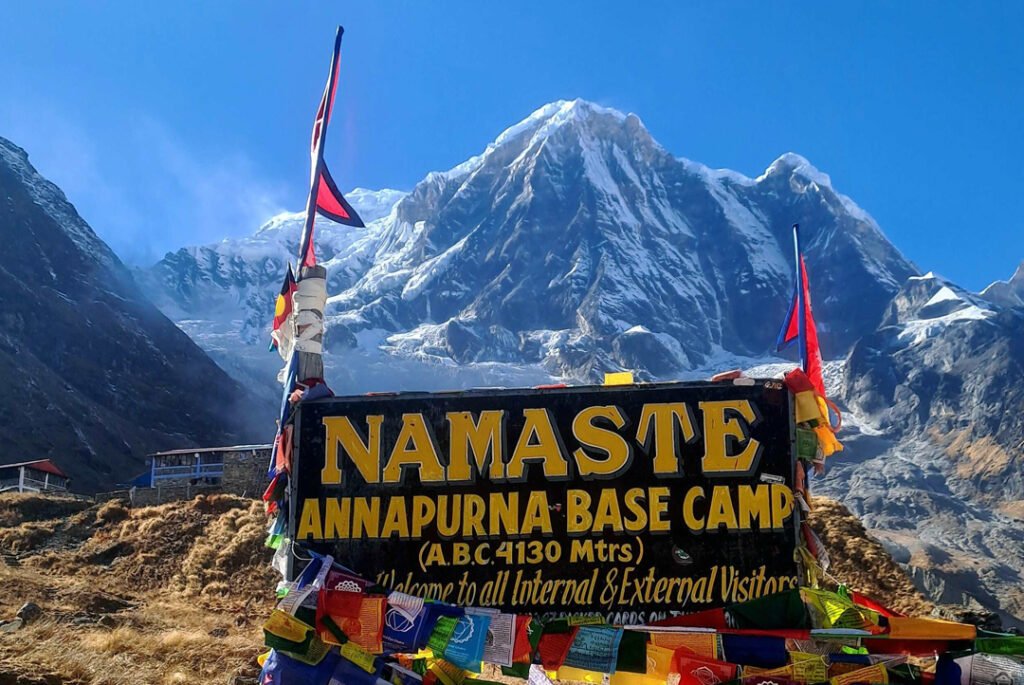
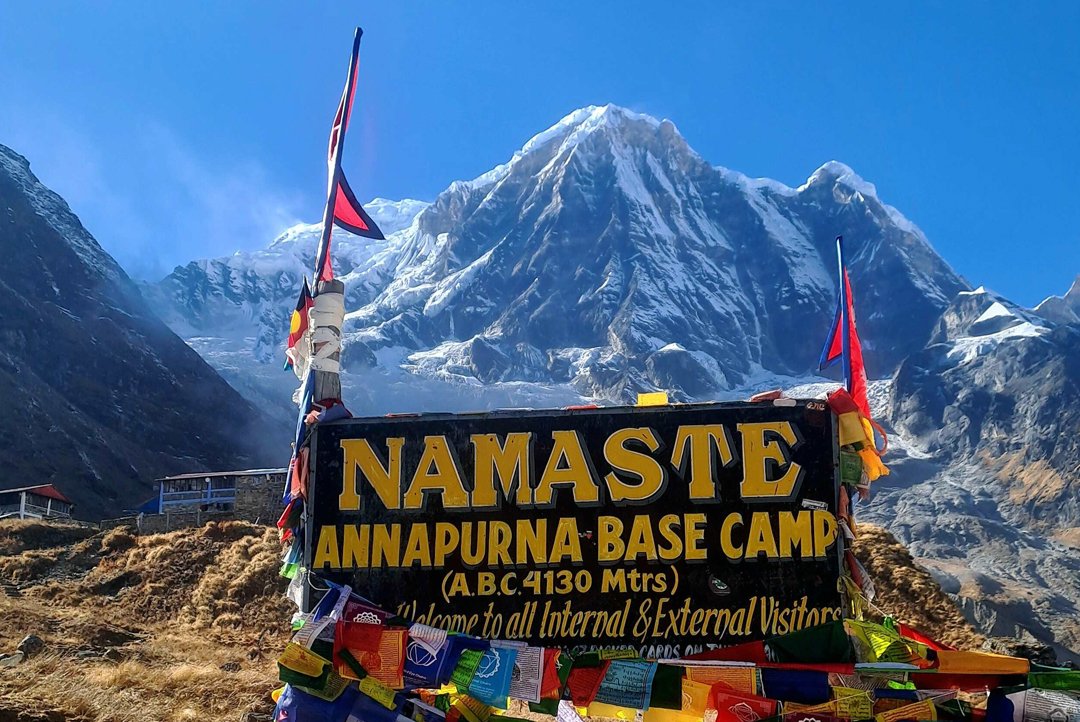
The Annapurna Base Camp Trek is one of Nepal’s most iconic and rewarding trekking experiences. Nestled in the heart of the Annapurna Sanctuary, this trek takes you deep into the majestic Annapurna range, culminating at an altitude of 4,130 meters (13,550 ft) at the base of Annapurna I, the 10th highest mountain in the world.
The journey offers an incredible diversity of landscapes — from lush green forests and terraced farmlands to high alpine meadows surrounded by snow-capped giants. Along the way, you’ll pass through charming Gurung and Magar villages, where warm hospitality and rich culture add depth to the adventure.
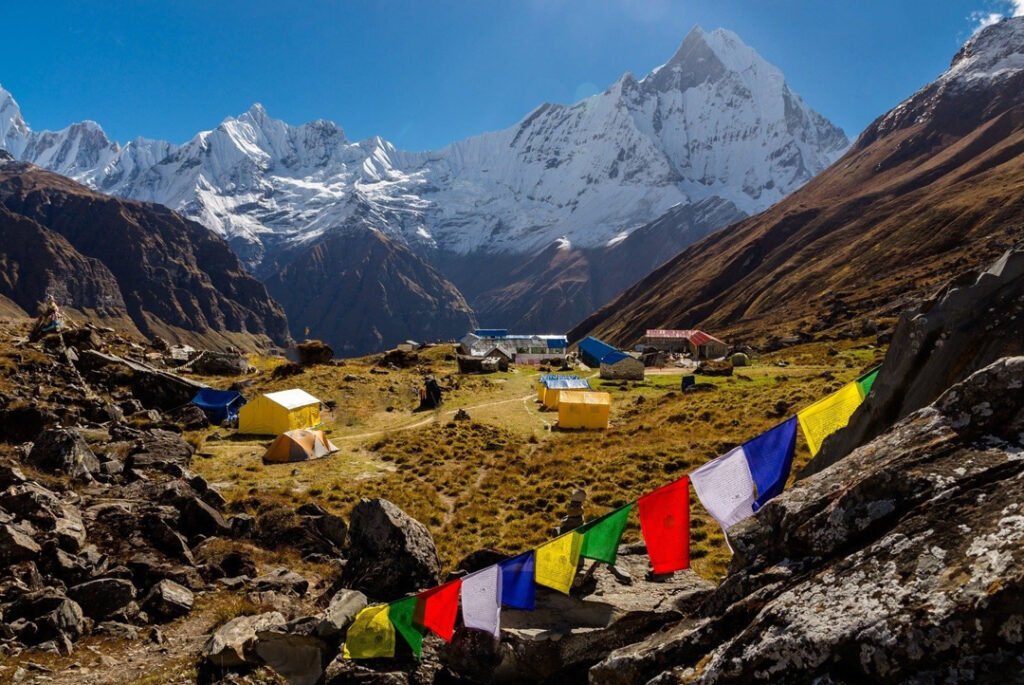
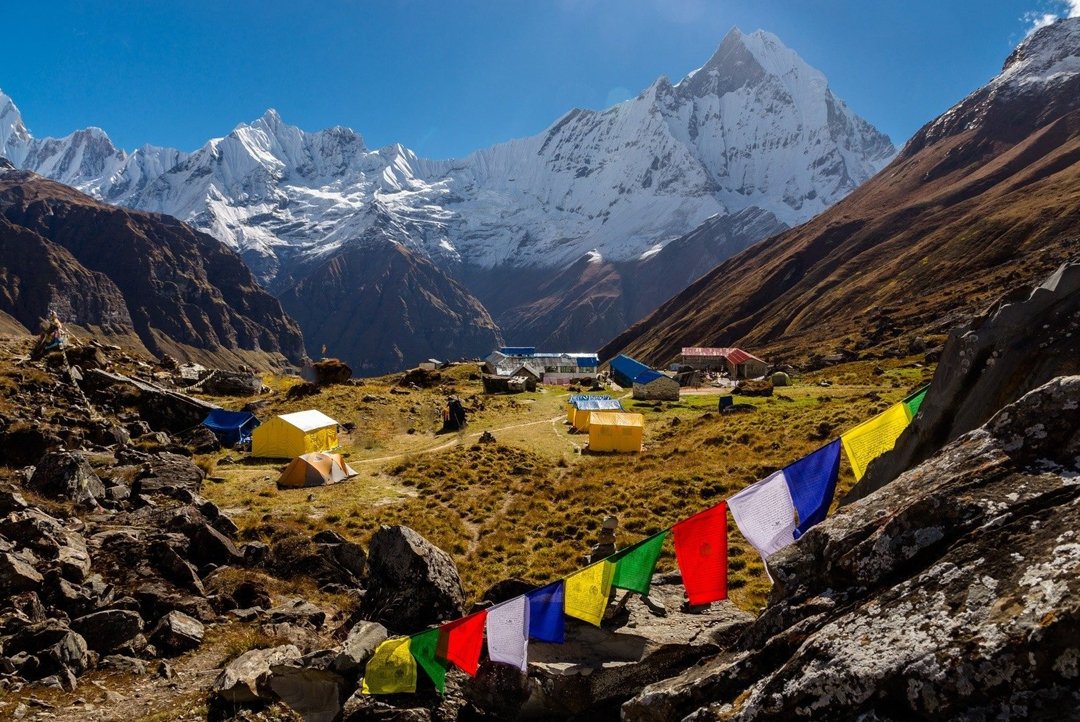
What makes ABC unique is the 360° amphitheater view of towering Himalayan peaks like Machapuchare (Fishtail), Annapurna South, Hiunchuli, and more — all from the comfort of base camp.
Whether you’re a seasoned trekker or a determined beginner, the Annapurna Base Camp trek is a moderate-level route that promises breathtaking views, spiritual tranquility, and a deep connection with the Himalayas.
Itinerary
Day 1:- Pokhra to Chhomrong (7,200ft) 5 Hours Trek
Meeting at Deshatan’s Pickup point in Pokhra and then reaching Kami by Jeep. Trek starts from Kami, lunch at Jhinu Danda and then day ends at Chhomrong.
Day 2:- Chhomrong to Dovan (8,200ft); 9 Hours Trek
We would begin the trek by hiking downhill via stone stairs until we reached a bridge. The bridge is a hanging bridge that we would cross to reach Chomrung Khola; here, we would pass through the dense forest. The forest is dotted with oak, rhododendron and alpine trees and blooming pink flowers along the way. It would then be a steep trail with Sinuwa Village on the other side, with a view of the Chomorng River roaring in the middle of the forest. As we walked ahead, we would start seeing Annapurna III and soon reach todays night stay Dovan.
Day 3:- Dovan to Machapuchhre Base Camp (12,139 ft); 9 Hours Trek
Today we would be crossing some bouldered sections. At the trek’s beginning, we would pass through a valley with the garrulous Modi Khola river. As we walked further, the trail would be rocky till we reached Bagar; we would then cross the Modi Khola River via the bridge. After crossing the bridge, we would reach Machapuchhare Base Camp.
Day 4:- Machapuchhre Base Camp to Annapurna Base Camp (13550 ft); 3 Hours Trek
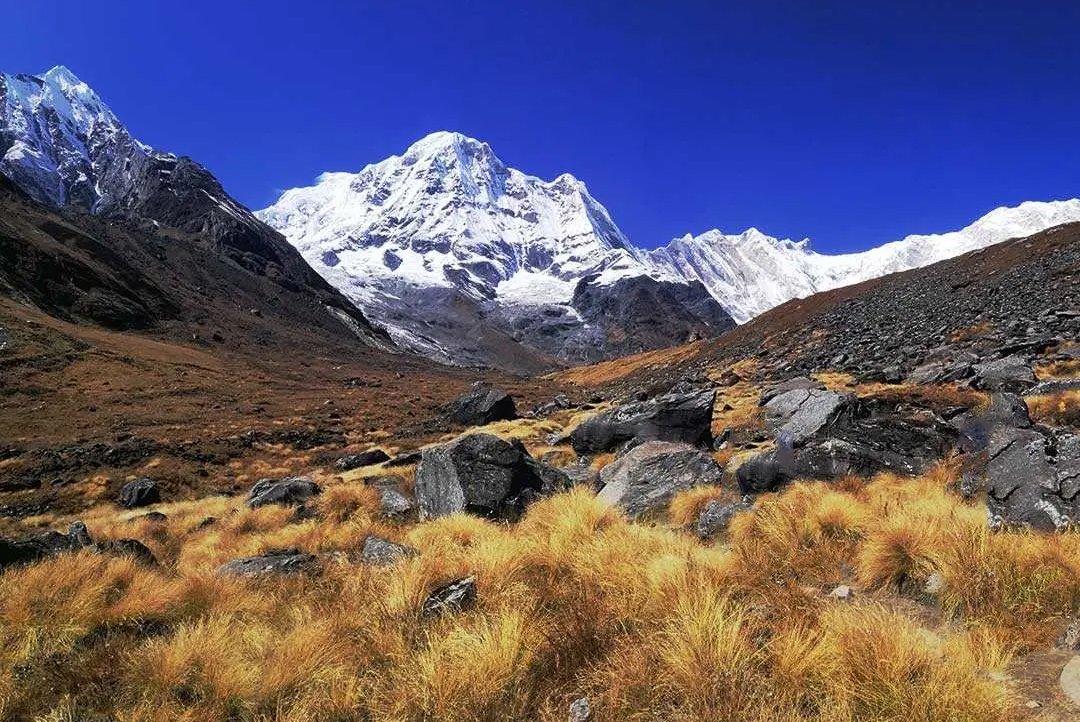
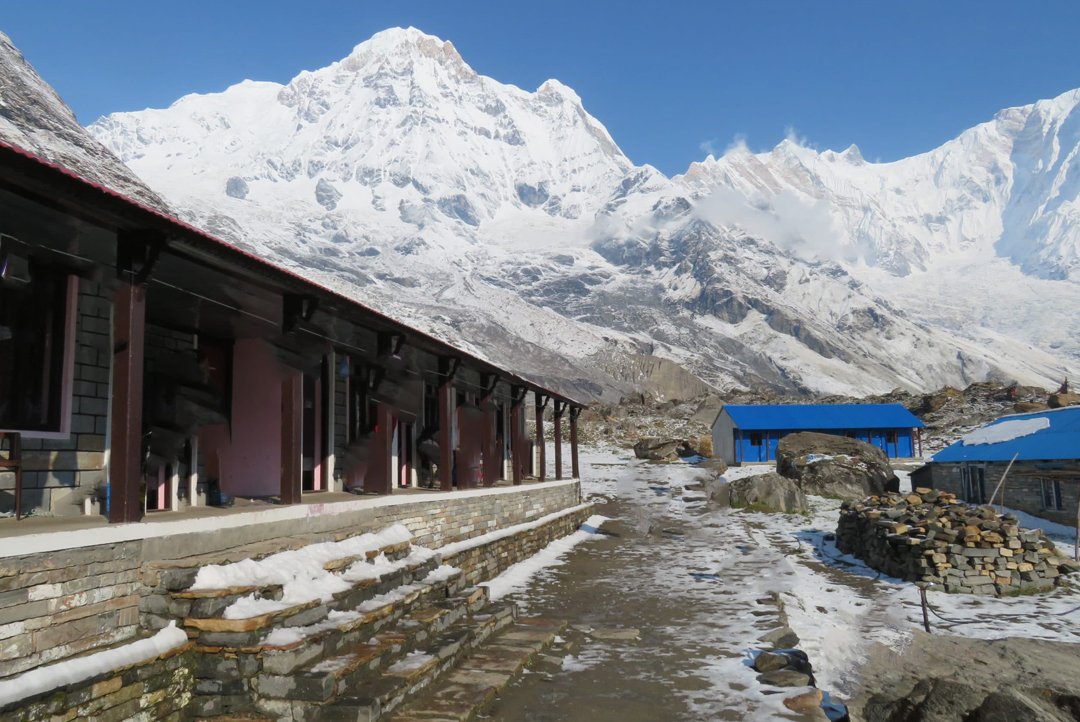
The trail ahead would be steep uphill initially, but then it would be stable uphill. From here, we would not see any trees; as we get close to the campsite, the Annapurna I will be visible and standing tall. Enjoy the camp’s picturesque view of the Annapurna range, Machapuchhre, Gandharvali and Gangapurna mountains.
Day 5:- Annapurna Base Camp to Dovan; 8 Hours Trek
Going to be the last day of long hours of walking. The trail while descending is not descent, its same as ascending.
Day 6:- Dovan to Chhomrong; 7 Hours Trek
Going to be the last day of long hours of walking.
Day 7:- Chhomrong to Pokhra
After breakfast we will start trekking towards Jhinu Danda which is approximately 2 hours trek. From there reaching Pokhra by Jeep.
Inclusions
1. All Meals (Vegetarian Food); starts from Lunch on Day 1 and ends at Breakfast
on departure day.
2. Tented accommodation in tea houses during trekking days.
3. Qualified High Altitude Trekking Guide.
4. Trained High Altitude Field Staff.
5. Transportation from Pokhra to Jhinu Danda and Jhinu Danda to Pokhra.
6. Permits
Exclusions
1. High Altitude Trekking Insurance (Mandatory).
2. Accommodation/Stay at Pokhra.
3. Food during the transit.
4. Any kind of personal expenses.
5. Mule or porter to carry personal luggage.
6. Medical Evacuation, hospitalization charge, etc.
7. Any other expense not mentioned under ‘Package Inclusions’.
8. Nepal entry visa Bring Two Passport Size photos only for foreigners (Not for
Indians).
9. Unforeseen costs due to weather conditions, etc.
Extra Expenses
- Porters for the personal bag*.
- Wi-Fi, charging batteries and hot showers, warm water for drinking
- Customary gratuities for guides & porters.
Things can be provided on demand and availability (participant has to pay extra for these things).
1- Satellite phone/set phone – a type of mobile phone that connects via radio links via satellites orbiting the Earth instead of terrestrial cell sites like cell phones. Therefore, they can operate in most geographic locations on the Earth’s surface.
2- Gamow/PAC HAPO Bag (Portable Hyperbaric Bag) – is a unique, portable hyperbaric chamber for the treatment of acute mountain sickness (AMS), also known as altitude sickness.
3- AEDs (Automated External Defibrillators) – are portable life-saving devices designed to treat people experiencing sudden cardiac arrest, a medical condition in which the heart stops beating suddenly and unexpectedly.
4- Helicopter Service – Helicopter services are available after Dovan only.
5- Mules Service – Mules are available upto Dovan only.
Preparation Guide
Physical Fitness
Engage in regular cardiovascular exercises like hiking, jogging, or cycling to build stamina and endurance.
Incorporate strength training exercises to strengthen leg muscles and core stability.
Practice hiking with a loaded backpack to simulate trekking conditions.
Altitude Acclimatization
- Plan for at least a day or two of acclimatization in Sonmarg or nearby areas before starting the trek.
- Stay hydrated and avoid alcohol and smoking to minimize the risk of altitude sickness.
- Ascend gradually and listen to your body’s signals to recognize symptoms of altitude sickness.
Packing Essentials
- Clothing: Pack lightweight, moisture-wicking clothing suitable for layering, including thermal innerwear, fleece jackets, waterproof and windproof outer layers, trekking pants, and woolen socks.
- Footwear: Invest in sturdy, well-fitted trekking boots with ankle support and good traction.
- Gear: Bring a comfortable backpack with padded shoulder straps, a rain cover, trekking poles, a sleeping bag rated for low temperatures, a lightweight tent or shelter, a headlamp or flashlight with extra batteries, a multi-tool or knife, and a first aid kit.
- Accessories: Carry a wide-brimmed hat or cap, sunglasses with UV protection, sunscreen, lip balm with SPF, a water bottle or hydration pack, water purification tablets or filter, quick-drying towel, and toiletries.
- Personal Items: Don’t forget essentials like identification documents, permits, cash, camera or smartphone for capturing memories, and any prescribed medications
Mental Preparation
- Familiarize yourself with the trekking route, terrain, and weather conditions to mentally prepare for the challenges ahead.
- Maintain a positive attitude, stay motivated, and be adaptable to changes in the itinerary or weather conditions.
- Embrace the spirit of adventure, connect with nature, and cherish the journey as an opportunity for self-discovery and personal growth.
Safety Measures
- Stay informed about weather forecasts and trail conditions before and during the trek.
- Follow the guidance of experienced trekking guides and adhere to safety protocols at all times.
- Stay together as a group, avoid straying off the designated trail, and be mindful of potential hazards like loose rocks, steep cliffs, or slippery surfaces.
- Keep emergency contact information handy and communicate regularly with your trekking companions and support staff.