
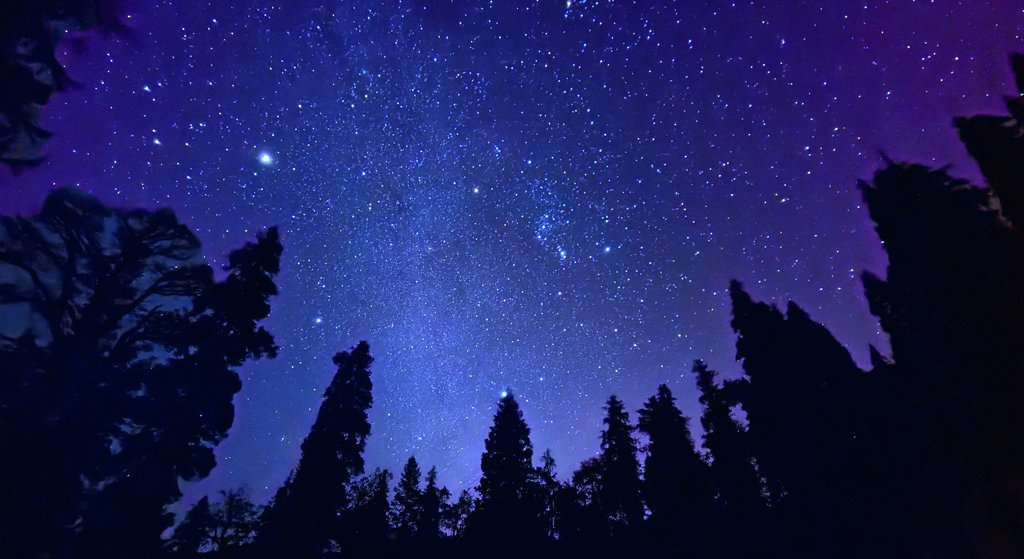
How to Capture Starry Nights in the Mountains
There’s something magical about mountain nights.
Far away from city lights, under a sky full of stars, you don’t just see the universe—you feel it.
Capturing that magic, however, isn’t as simple as pointing your camera at the sky. Night photography in the mountains requires patience, the right settings, and a bit of planning.
If you’ve ever looked up at a sky full of stars and wished you could capture it forever, this guide will help you do exactly that.
Why Mountains Are Perfect for Star Photography
The mountains offer ideal conditions for astrophotography:
- Minimal light pollution
- Clear, crisp air
- Higher altitude = better visibility
- Dramatic foregrounds like peaks, tents, and lakes
This combination creates stunning opportunities to capture the Milky Way, star trails, and breathtaking night landscapes.
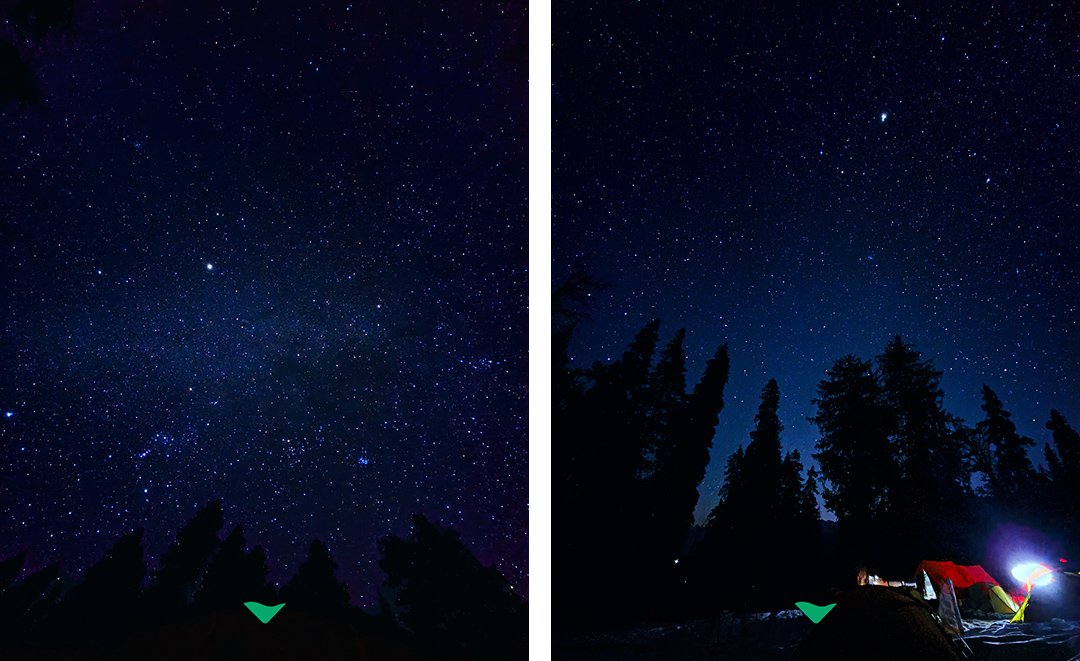
1. Choose the Right Location
Not all locations are equal when it comes to night photography.
Look for:
- Remote areas away from city lights
- Open skies without obstructions
- Scenic foreground elements (mountains, campsites, lakes)
Trekking routes in Himachal, Uttarakhand, and Kashmir are excellent for this.
2. Timing Is Everything
To capture the best night sky:
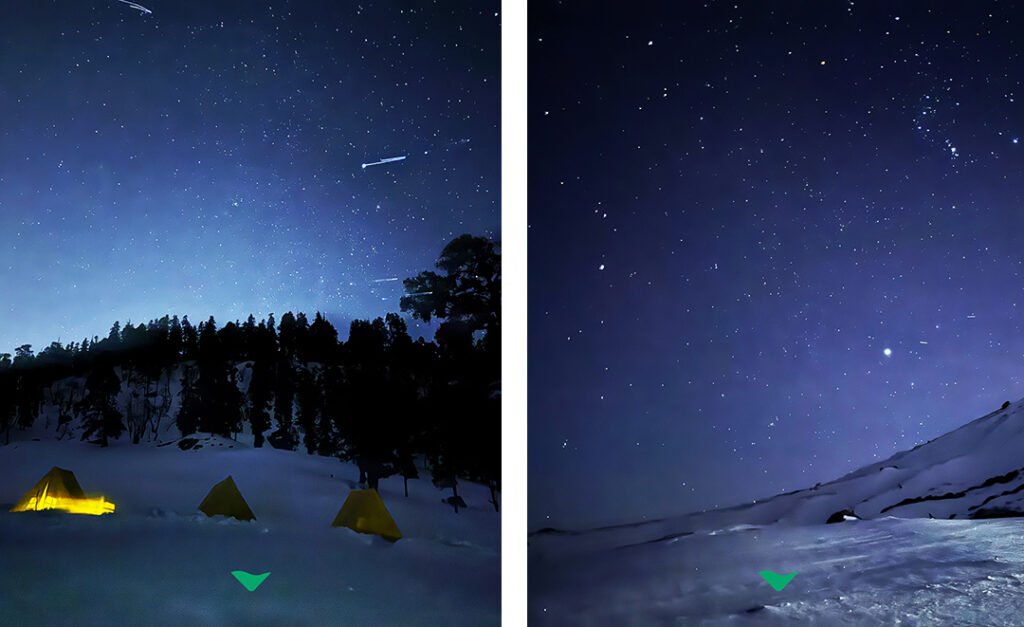
- Shoot during a new moon or when the moon is minimal
- Check weather forecasts—clear skies are essential
- Best time: between 10 PM to 3 AM
- Milky Way visibility peaks during summer months
Apps like Star Walk or Sky Guide can help you plan your shot.
3. Use the Right Gear
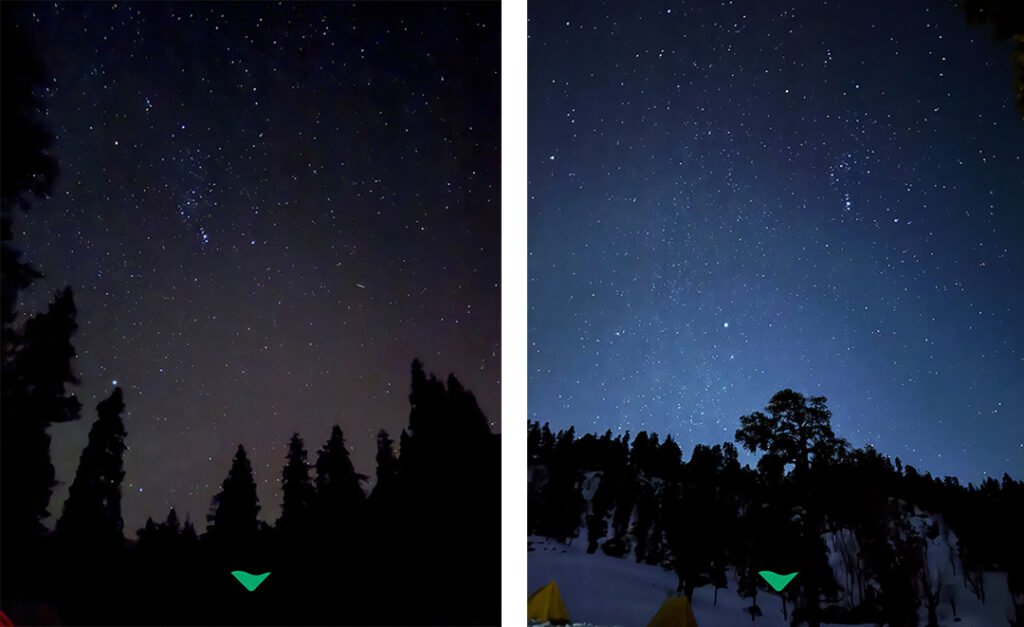
While you can shoot with a smartphone, a DSLR or mirrorless camera gives much better results.
Essential gear:
- Camera with manual settings
- Wide-angle lens (preferably f/2.8 or lower)
- Tripod (non-negotiable)
- Extra batteries (cold drains them quickly)
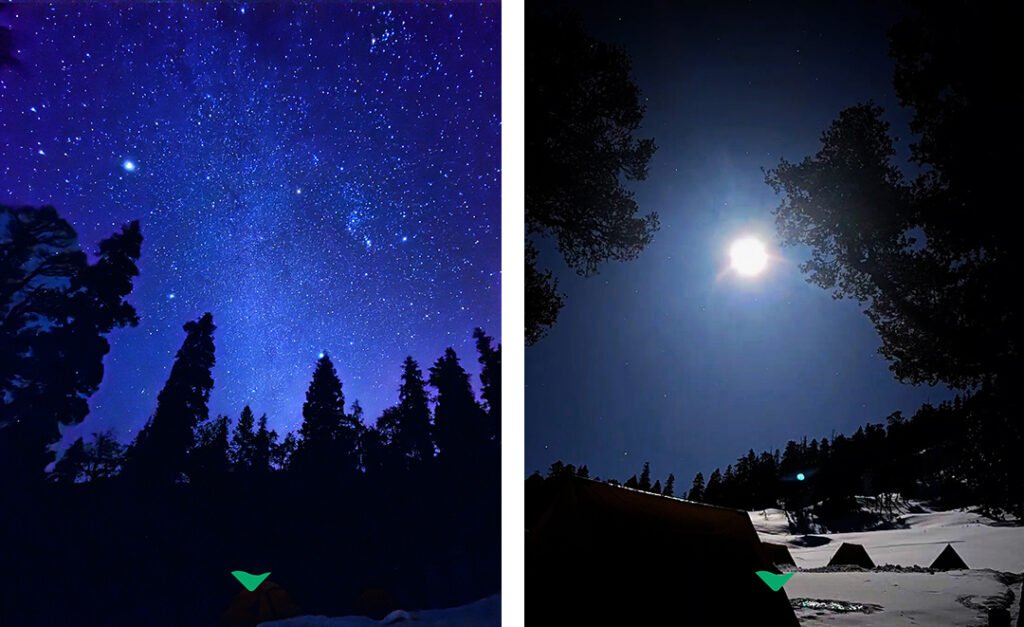
4. Camera Settings for Star Photography
Here’s a simple setup to start with:
- Mode: Manual
- ISO: 1600–3200
- Aperture: f/2.8 (or lowest possible)
- Shutter Speed: 15–25 seconds
- Focus: Manual (set to infinity)
💡 Tip: Start with these and adjust based on your results.
5. Compose Like a Storyteller
A sky full of stars is beautiful—but adding a foreground makes your photo powerful.
Try including:
- A glowing tent
- Silhouettes of mountains
- A person gazing at the sky
- Reflections in a lake
This creates depth and tells a story instead of just capturing stars.
6. Be Prepared for Mountain Conditions
Night shoots in the mountains are not easy.
- Temperatures drop significantly
- Wind can shake your tripod
- Terrain can be uneven
Carry warm clothes, gloves, and always prioritize safety over the shot.
7. Can You Use a Smartphone?
Yes—but with limitations.
- Use night mode or pro mode
- Keep the phone stable (tripod or rock support)
- Use apps for long exposure
While results won’t match a DSLR, you can still capture beautiful memories.
8. Experiment with Star Trails & Milky Way
Once you’re comfortable, try advanced shots:
- Star Trails: Long exposures or stacking multiple images
- Milky Way Shots: Shoot in darker areas with proper alignment
These techniques take time but produce incredible results.
Pro Tips for Stunning Shots
- Shoot in RAW format for better editing
- Avoid using flash—it ruins natural light
- Use a timer or remote shutter to avoid shake
- Keep your lens clean (fog can ruin shots)
- Be patient—the perfect shot takes time
Final Thoughts
Capturing starry nights in the mountains is more than photography—it’s an experience.
It’s about sitting in silence, feeling the cold air, and watching the universe unfold above you.
And when you finally capture that perfect shot, it’s not just a photo—it’s a memory frozen in time.
Want to Experience This Yourself?
Join Deshatan India on treks where nights are filled with stars and stories.
👉 Come for the trek, stay for the stars