
How Long Does Plastic Survive? The Hidden Cost of Littering in the Mountains
“The mountains give us clean air, fresh water, and unforgettable memories. The least we can do is leave them cleaner than we found them.”
Every trek begins with excitement—the sunrise over snow-covered peaks, crystal-clear rivers, lush forests, and the silence of nature. But hidden among these breathtaking landscapes is an unfortunate sight: plastic bottles, wet wipes, snack wrappers, and other waste left behind by visitors.
Most people think that a single piece of litter doesn’t matter. But the truth is, some of these items will remain in nature long after we’re gone.
The Lifespan of Common Trekking Waste
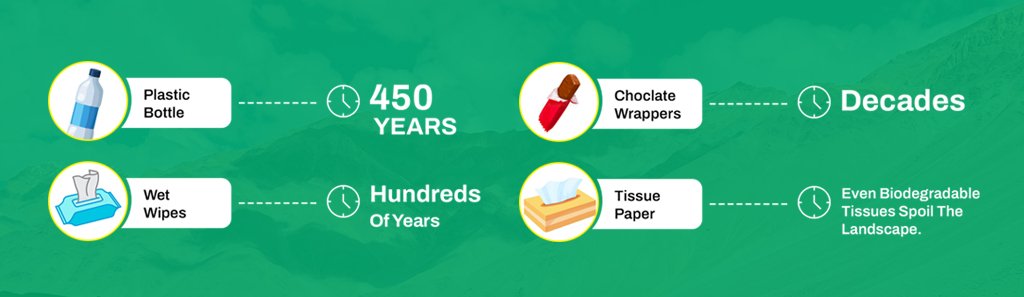
Plastic Bottles – Around 450 Years
A plastic water bottle may be used for just a few hours, but it can stay in the environment for nearly 450 years.
Instead of disappearing, it slowly breaks down into tiny plastic particles known as microplastics, contaminating soil, rivers, wildlife, and even the water we drink.
Better Alternative:
- Carry a reusable steel or BPA-free water bottle.
- Refill from safe water sources instead of buying disposable bottles.
Wet Wipes – Hundreds of Years
Despite being marketed as “flushable” or “biodegradable,” most wet wipes contain plastic fibers.
In mountain environments, where decomposition is much slower due to cold temperatures, wet wipes can remain for hundreds of years.
They often:
- Pollute water sources
- Harm wildlife
- Create unpleasant campsites
- Break down into microplastics
Better Alternative:
- Carry a reusable cloth or quick-dry towel.
- Pack out all used hygiene products.
Chocolate & Snack Wrappers – Decades
Energy bars and chocolates are trekking essentials, but their wrappers are usually made from multi-layer plastic and aluminum, making them difficult to recycle.
A wrapper thrown on a trail may remain there for decades, fluttering across valleys or getting trapped in streams.
Besides spoiling the beauty of nature, wildlife often mistakes colorful wrappers for food.
Better Alternative:
- Keep a dedicated trash pouch in your backpack.
- Bring every wrapper back to the nearest dustbin.
Tissue Paper – Not as Harmless as You Think
Many trekkers assume tissue paper is biodegradable and can simply be thrown away.
While tissues eventually decompose, they still:
- Make campsites look dirty
- Spread bacteria
- Attract animals
- Take much longer to decompose in cold alpine climates
Remember: Biodegradable doesn’t mean it should be left behind.
Better Alternative:
Carry a small waste bag and pack out used tissues whenever possible.
Why Plastic Is a Bigger Problem in the Himalayas
Mountain ecosystems are incredibly fragile.
Cold temperatures, low microbial activity, and harsh weather mean waste decomposes much more slowly than it does in cities.
Every year, thousands of trekkers visit popular trails like:
- Hampta Pass
- Kedarkantha
- Valley of Flowers
- Bhrigu Lake
- Chandratal
- Everest Base Camp
Even if each trekker leaves behind just one piece of litter, the cumulative impact becomes enormous.
Plastic doesn’t just ruin the scenery—it pollutes rivers that supply drinking water to millions of people downstream.
The Leave No Trace Principle
Responsible trekking isn’t only about reaching the summit.
It’s about ensuring the next person experiences the same pristine beauty.
Follow these simple practices:
✅ Carry a reusable water bottle.
✅ Avoid single-use plastics.
✅ Bring a personal trash bag.
✅ Pack out every wrapper, bottle, tissue, and wet wipe.
✅ Encourage fellow trekkers to do the same.
Small Actions Create Big Change
Imagine if every trekker picked up just one extra piece of litter during every trek.
Thousands of kilograms of waste could be removed from our mountains every year.
Nature has given us breathtaking landscapes, peaceful forests, sparkling rivers, and unforgettable adventures. Protecting them is a responsibility shared by every traveler.
Final Thoughts
Plastic may survive for centuries, but our choices today determine whether future generations inherit clean mountains or polluted trails.
The next time you pack for an adventure, remember:
Take memories, leave footprints, and bring back every piece of waste you carry.
Because the greatest adventure isn’t just reaching the summit—it’s protecting the mountains that make those adventures possible.
Trek Responsibly with Deshatan
At Deshatan, we believe every trek should leave a positive impact on nature. We encourage our trekking community to follow eco-friendly practices, reduce plastic waste, and preserve the beauty of the Himalayas for generations to come.